Virginia Woolf's Mrs Dalloway (Hogarth Press, 1925) perfects the novel of a single day, and the perfection is a polemic: three years after Ulysses (1922) declared one day in Dublin infinite, Woolf answered with one Wednesday in June 1923 and proved the modern novel needed neither epic bulk nor obscenity scandal to hold a civilization. The verdict of this rereading is that the single-day form was never a constraint she accepted from Joyce; it was a verdict she delivered on the novel of plot, and it has not been improved upon since.
Mrs Dalloway · Virginia Woolf · Hogarth Press (1925) · novel
The genealogy matters and is usually mislaid. Ulysses appeared in Paris in 1922 under the imprint of Sylvia Beach's bookshop, and the Woolfs, whose Hogarth Press was offered the English rights, declined them — Leonard judged the book unpublishable, and Virginia, admiring and resisting it in nearly equal measure, went her own way into the same territory. Her working title, The Hours, announced the design: a book built of time rather than event, its days drafted and redrafted between 1922 and 1924. Clarissa Dalloway herself was an heirloom, a minor figure from her first novel The Voyage Out (1915) promoted a decade later to carry an entire Wednesday.
Can a single day carry an entire life?
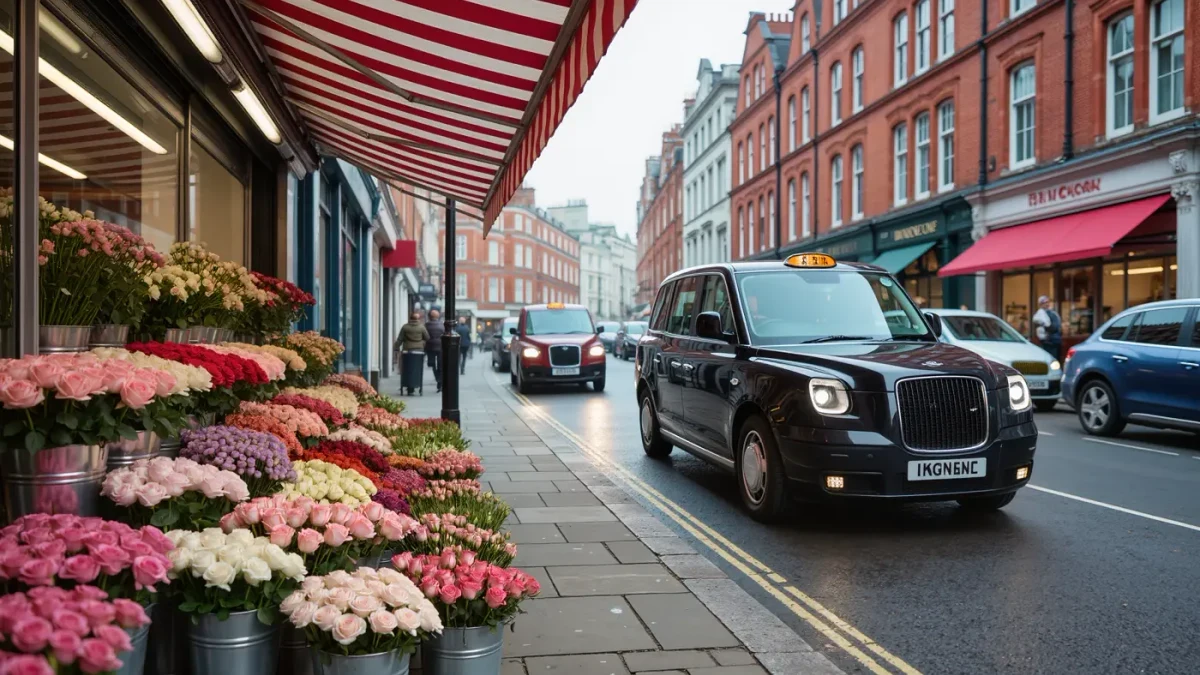
Yes — if the day is drilled rather than stretched. Woolf described her method in her diary as a process of tunnelling: caves dug downward from each London hour into buried decades, so that a flower order on a June morning opens onto Bourton in the 1890s, a memory of Sally Seton, a proposal from Peter Walsh, and a whole biography delivered without leaving the pavement. The novel's opening sentence — “Mrs Dalloway said she would buy the flowers herself” — sounds like a social note and is in fact the mechanism starting: a mind deciding, and a city receiving the decision.
The clocks hold it together, and Woolf uses them the way a composer uses a timpani. Big Ben strikes through the book, and the famous phrase that follows each stroke — “the leaden circles dissolved in the air” — makes time both public and annihilating: the hours belong to everyone, and they dissolve everyone equally. Between strokes, narration passes from mind to mind along the street itself, the free indirect style riding the city's noise the way a current rides a wire. A motorcar backfires in Bond Street and a crowd gathers; a skywriting airplane spells letters above the roofs that no two witnesses read the same way. These are the novel's real incidents, and they are switchboard scenes: strangers unified by stimulus, divided by interpretation, which is the book's entire account of society.
What work does London do in the novel?
London is the plot. Remove the city and nothing remains but a woman buying flowers and giving a party; add it and every street becomes a corridor between private consciousness and public history. The war is five years gone and present in everything: in the airplane the crowd mistakes for a marvel, in the car whose possible royalty stops traffic, and most of all in Septimus Warren Smith, the decorated clerk whose shattered nerves the novel refuses to treat as a private matter, since his doctors are the state.
Those doctors are the book's true villains, and Woolf draws them with a hatred worth rereading slowly. Dr. Holmes, who prescribes common sense; Sir William Bradshaw, the great nerve specialist, who worships a goddess named Proportion and converts the inconvenient to his own calm — the passages are satire of the highest order, aimed at the machinery that turns suffering into diagnosis. That machinery is empire in miniature. The novel's party at nightfall assembles cabinet ministers and a Prime Minister around Clarissa's silver and roses, and the novel never lets the reader forget what the glitter is for: London in June 1923 is a capital administering half the world while one of its veterans hears the dead speaking in Regent's Park. The empire gives the party; the empire produces Septimus; the novel sets the accounts side by side and declines, famously, to reconcile them.
Is Septimus the price of Clarissa's party?
Structurally, yes; morally, the novel refuses to let the question come out cleanly, and that refusal is its greatness. Septimus and Clarissa never meet. They share the street, the sky, and — through Bradshaw, who arrives at the party with the news — a single sentence of connection, after which Clarissa withdraws to a little room and thinks through the boy's death as an act in which he kept something whole that they wanted to break. She returns to her guests. The party continues. Nothing is settled.
Two generations of criticism have worked the pairing, and rereading sustains both readings. As social indictment, the doubling is savage: one Londoner drops from a window so that another's evening may glitter uninterrupted, and the novel's structure makes the exchange feel systemic rather than accidental. As spiritual transaction, it is stranger and better: Clarissa's sympathy for a man she never knew is the book's one genuine communion, conducted entirely without religion, across class, in the time it takes a clock to strike. Woolf, who distrusted both sermons and solutions, built a novel that performs the social order and audits it in the same breath.
How has the single-day form lived on?
As an inheritance so large it reads like a genre. Michael Cunningham's The Hours (1998), which took Woolf's working title and won the Pulitzer Prize in 1999, made the day-novel a contemporary mode, and the 2002 film adaptation carried it further; anniversary essays of the sort collected by BBC Culture still measure new fiction against Woolf's Wednesday. Every novel that confines itself to twenty-four hours and calls that confinement a method is quoting her, whether or not it names the source.
The instruction for rereading is therefore formal: follow the strokes. Read Mrs Dalloway once for Clarissa and once for the clockwork — the chimes, the tunnels, the traffic of minds — and the book reveals itself as a machine for showing that a civilization can be measured in one day because a day is all a civilization ever occupies at once. Woolf said it with a flower order, a backfire, and a band playing in the park. A century later the circles are still dissolving, which is the correct response.