The best small press books earn their shelf space the same way good furniture does: by holding up under daily use. They are titles from independent publishers — houses too small to buy their way into front tables or airport racks — and they survive on word of mouth, library orders, and readers who take a chance. This is an evergreen guide to why those books matter, why the big retail channels so often miss them, and how to judge one before you buy.
A confession of method first. This piece names no titles, because a roundup that invents a canon is worse than no roundup at all. What it offers instead is a working definition, a diagnosis of the discovery problem, and a set of tests any reader can run in a bookstore or on a publisher's website. The judgment stays with you; the criteria are the argument.
What does "small" actually mean for a press?
Start with the word itself, because the industry uses it loosely. Cambridge Dictionary defines "small" as limited in size, amount, or importance — and that third sense, limited importance, is precisely the prejudice small presses fight. The dictionary's other senses are more useful here: "not large but sufficient," and "limited in scope." A small press is small in scope, not in ambition. Its list may run to a handful of titles a year. Its print runs are modest. Its staff fits in one room, or one corner of one room.
Vocabulary.com adds a nuance the trade would do well to keep: "small" is a comparative word. Everything is small compared to something else. A press with ten employees is small against the conglomerates and large against the poet who hand-sews chapbooks at a kitchen table. The category is a spectrum, and the books at every point on it share one economic fact: nobody involved has much margin for a flop.
Why do big retailers overlook these books?
The overlook is mostly mechanical, not aesthetic. Large retail channels — the big online stores, the warehouse clubs, the airport racks — run on volume and on signals of volume: co-op placement dollars, celebrity blurbs, a sales rep's pitch, a trade review in the right slot. A small press can rarely pay for any of that. Its titles enter the channel late, if at all, and sit without visibility, which reads to the algorithm as low demand, which justifies the original decision. The loop closes quietly.
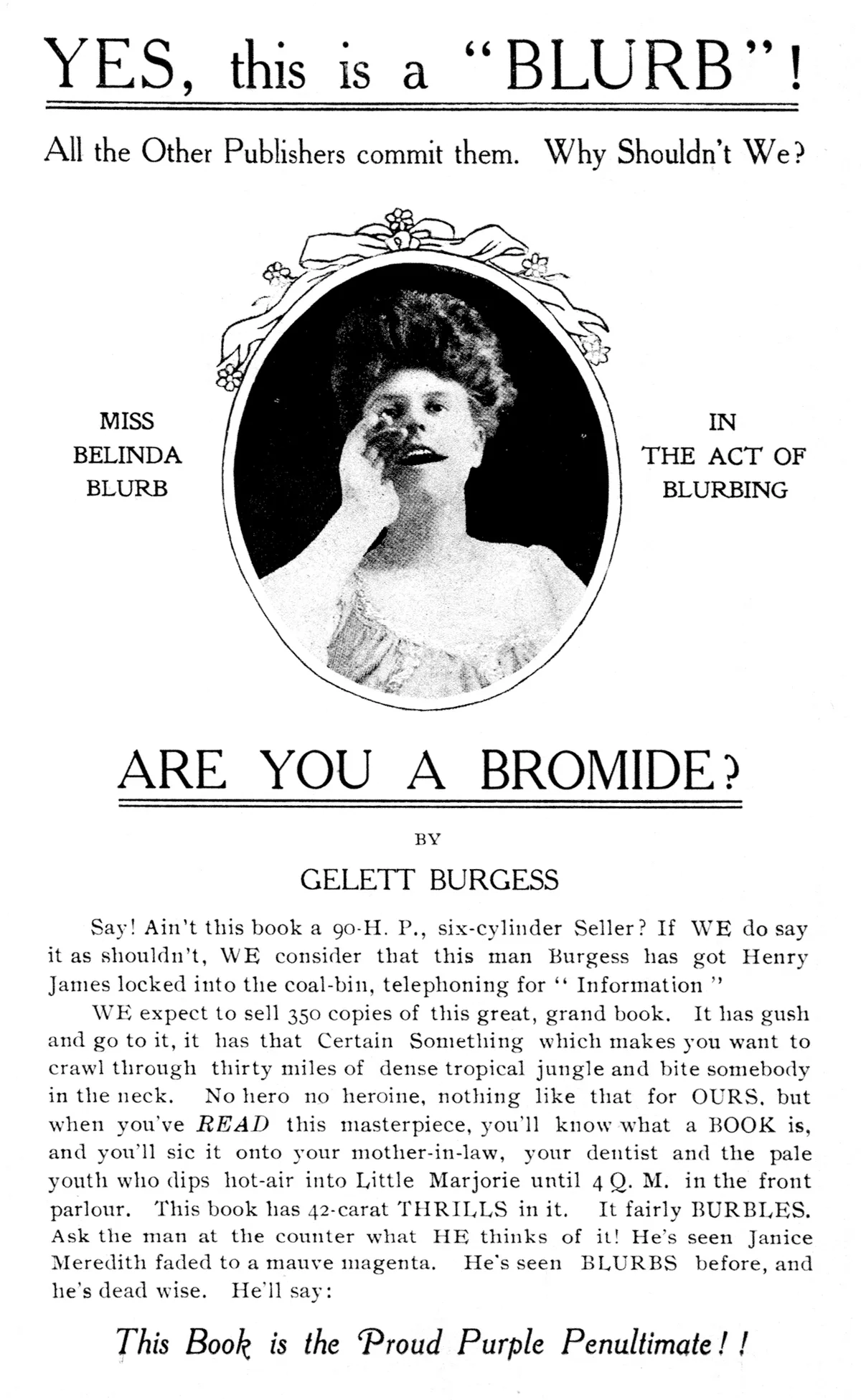
We have written before about how the machinery of attention works upstream of the reader, in The Manufactured Star: How Trade Reviews Decide Which Books Get Noticed. The same logic runs downstream at retail. And the blurb economy compounds it: as argued in The Blurb Economy: Who Writes Jacket Praise and Why It Matters, jacket praise is a currency, and small presses hold little of it. A brilliant novel with no famous name on the cover looks, on a screen, like nothing at all. We covered a connected angle in The Manufactured Star: How Trade Reviews Decide Which Books Get Noticed.
There is an upside to being overlooked. A book nobody is pushing has no positioning to protect. It can be strange, short, locally rooted, formally stubborn, or twenty years late to a fashion. Some of the most durable reading experiences of the last century reached readers precisely because a small house declined to make them palatable.
How do you judge a small press book before buying?
Here is the practical part — four tests, none of which requires a review to have existed.
- Read the publisher, not just the book. Look at the house's catalog. If the other titles share a seriousness of intent — even across different genres — the editor is doing real work, and editing is the invisible advantage of a good small press. A house that publishes whatever it can get is a printer; a house with a discernible taste is a press.
- Check the object. Small presses often produce better-made books than the trade: sewn bindings, real paper, covers designed by someone who read the manuscript. The physical book is part of the value, a point we take up at length in Weight and Light: Print vs Digital Books, and What Each Format Actually Gives You. Pick it up. A flimsy binding on a book meant for rereading is a fair reason to hesitate.
- Read the first three pages cold. No jacket copy, no blurbs. Small press books live or die by their opening movement, because nobody will carry you across a weak start out of loyalty to a brand.
- Ask a bookseller. Independent bookstore staff handsell what the algorithms cannot see. The question "what did this store love that nobody bought?" gets better answers than any homepage carousel.
What this means in sum: the small press reader does the discoverability work that marketing budgets do for the big houses. The reward is proportionate. You get a book chosen by an editor rather than a committee, and the pleasant obligation of telling people about it yourself.
Where should a skeptical reader start?
Start narrow. Pick one genre you already read, find the small presses active in it — most are identifiable by their prize longlists and by which literary magazines acknowledge them — and read one catalog end to end. Catalogs are short. They are also the most honest advertising in publishing, because a house's own list reveals its taste better than any mission statement.
Then apply the same discipline you would to any verdict. Our guide in How to Write a Book Review — The Unfinished Sentence: How to Review a Book You Didn't Finish makes a related point: honesty about a book is a service to other readers, and small press books deserve that honesty more than most, since they cannot survive on hype. A candid bad review of a small press title is a form of respect; a polite shrug is not. Readers following this should also see Weight and Light: Print vs Digital Books, and What Each Format Actually Gives You.
What the evidence supports — and what remains open
What this argument has established: the "small" in small press is a matter of scale and resources, not of quality, and the retail channels that overlook these books do so for structural reasons that have nothing to do with the writing. The dictionary record is unglamorous but clarifying — both Cambridge and Vocabulary.com treat smallness as relative and as a matter of scope, which is exactly how the category behaves in practice.
What remains unknown is which of this year's overlooked titles will matter in twenty years. That question cannot be settled by any roundup, including a hypothetical one. The honest position is that small press books are a standing bet on editors over marketing, and that the bet, on the historical record of houses that began small and stayed serious, pays often enough to justify the shelf space. The shelf, unlike the algorithm, does not need to be filled. It only needs to be worth dusting.