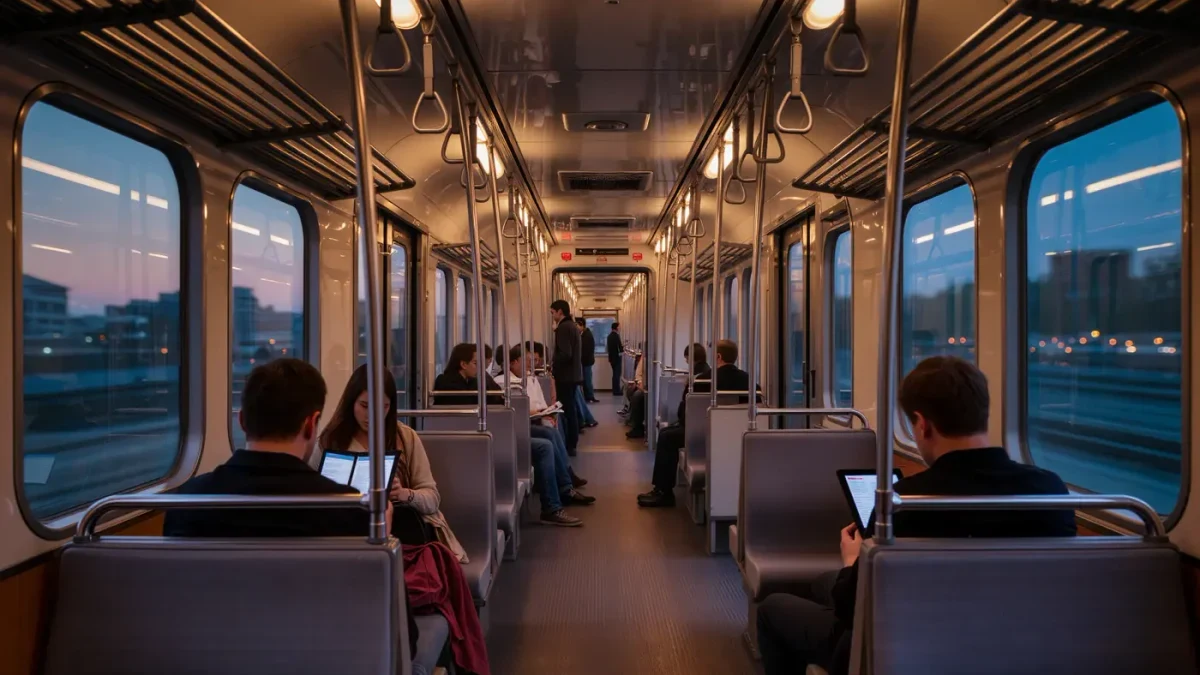
Ebook sales stalled because the pandemic reading spike reversed, prices rose, and print proved durable. After peaking during the 2020-21 lockdowns, ebooks slid back to a plateau at roughly a fifth of the trade book market in the US and UK, a share that has barely moved since — a settled format rather than a growing one.
What happened to ebook sales after the pandemic?
They spiked, then mean-reverted. Locked-down readers bought devices and downloaded titles through 2020 and 2021; when offices and schools reopened, screen-fatigued buyers drifted back to paper. Ebook share fell from its lockdown high-water mark and has since hovered near a fifth of the market, per recurring industry surveys.
The spike was real but situational. It reflected circumstances — closed stores, empty commutes filled with reading, devices bought for homebound households — rather than a permanent conversion of the reading public. When the circumstances ended, so did the growth, and the format returned to the share it had been approaching all along.
Library borrowing tells a version of the same story. Digital library circulation climbed through the same period, with waiting lists for popular ebooks running months long — evidence that demand for cheap, instant digital reading never disappeared. What stalled was the paying market's growth, not readers' appetite for the format when the price is zero.
What is agency pricing, and why did it matter?
Agency pricing lets publishers — not retailers — set the ebook's retail price, with stores taking a commission. Introduced as publishers renegotiated terms around new tablet storefronts in the early 2010s, challenged by the US Department of Justice in 2012, and later reinstated widely across the industry, it raised ebook prices and eroded the deep discounts that had fueled the format's early rise.
The price story is the demand story. When new ebooks cost nearly as much as the paperback — and more than the discounted hardcover on the front table — the value proposition collapsed. Readers who had migrated to screens during the era of cheap bestsellers had little reason to stay once the bargains disappeared, and the publishers, bruised by the earlier pricing wars, preferred a smaller, stabler ebook business. The economics of those battles have been chronicled by business outlets including Bloomberg.
Didn't ebook subscriptions solve the price problem?
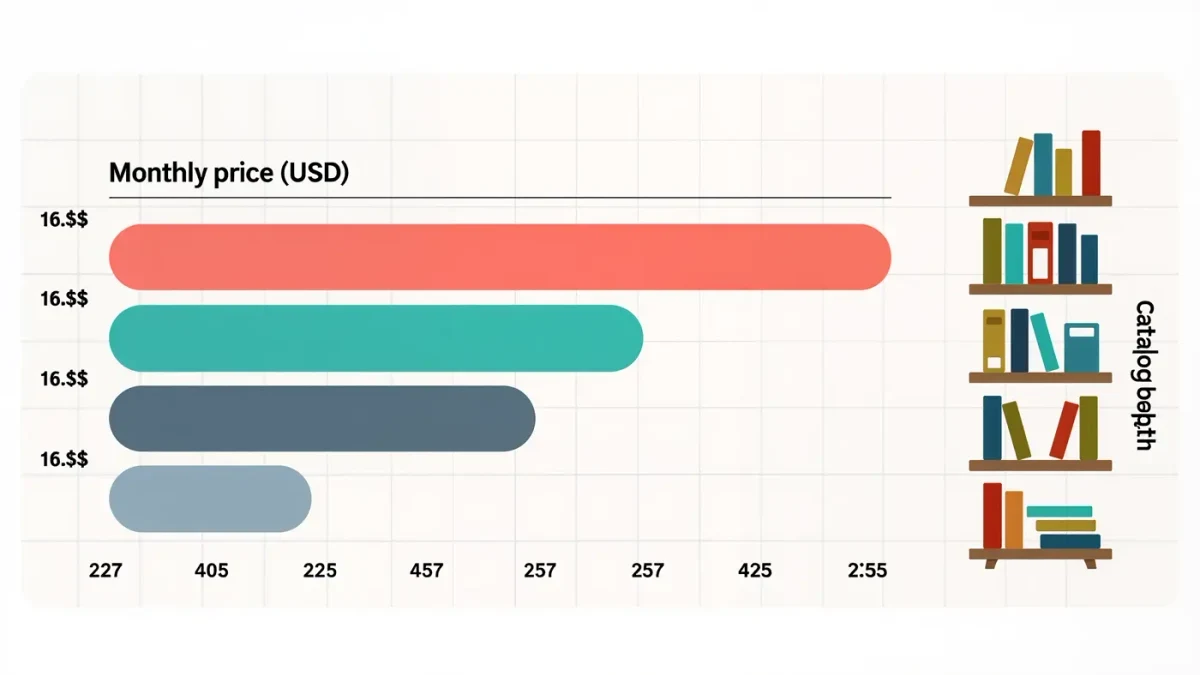
Only for a subset of reading. Flat-fee programs such as Kindle Unlimited work well for genre readers who finish many titles a month, but front-list books from large houses mostly stay outside the all-you-can-read pool, so subscriptions never became the Spotify of books — an analogy the industry keeps reaching for and keeps failing to reach.
The mechanics explain the gap. Subscription catalogs run on a pooled payout divided among pages read, which rewards long, fast, series fiction and punishes everything else. Publishers, seeing those incentives, withhold the new releases that would actually drive mass sign-ups. The result is a subscription economy that serves genre super-readers excellently and leaves the average buyer — one or two new books a month — paying full price anyway.
What role did devices play in the stall?
A quiet one. The dedicated e-reader stopped improving in ways anyone noticed, and the phone — the device everyone already owns — is a mediocre reading surface for books, whatever it does for feeds. Tablets accumulated heavier software and shorter attention spans around them. Nobody needed new hardware to stay in the format, but nothing pulled new readers into it either.
Compare that with audio, where the smartphone was a perfect player and the wireless-earbud era made listening frictionless. Ebooks' device story is the absence of a comparable pull: the last genuinely mass-market reading gadget shipped years ago, refreshed in modest increments, and excited no one. Formats usually grow when something new arrives to play them on; ebooks are still waiting.
Why did readers drift back to print?
Partly weariness, partly objects. A hardcover is a gift and a shelf is an identity; a printed book needs no charging and never logs you out. Print also proved resilient at retail, with special editions, illustrated jackets, and spray-colored edges giving buyers reasons to pay more for atoms than for bytes.
The drift was also cultural. Social media made shelves photographable — collections became content, and books became objects worth owning rather than files worth licensing. Meanwhile the core ebook customer, the commuter with a device in every bag, stopped commuting for a while; some of that behavior simply never resumed at the old intensity.
None of that is nostalgia, exactly; it is consumer behavior under real price signals. When the digital copy stopped being the cheap option, buyers reconsidered what they wanted from a book — and for many, the answer turned out to be an object, not a license.
Could ebooks grow again?
Possibly, but the catalysts look external: better hardware, aggressive pricing, or a generation that never bonds with paper. Absent one of those, the plateau's stability is the story — ebooks found the readers who prefer screens and stopped there, at roughly a fifth of the market, doing steady business without revolutionary ambition.
The plateau is not a failure; it is an equilibrium. Ebooks remain the best format for a meaningful minority of readers — travelers, large-print users, instant-gratification buyers, midnight releasers — and a profitable one for publishers, since the marginal cost of a download rounds to zero. What ended was the expectation that the minority would become everyone. The honest summary for buyers: pick the format that fits the moment — paperback for the shelf, ebook for the plane, audio for the car — and assume no revolution is coming. Publishing spent a decade learning that readers agree.