The history of how books were made, sold, banned and read: print runs and paper shortages, censorship regimes, circulating libraries, the paperback shift and the distribution systems that decided who could read what. Dates and figures included. For readers interested in books as material history.
The history of how books were made, sold, banned and read: print runs and paper shortages, censorship regimes, circulating libraries, the paperback shift and the distribution systems that decided who could read what. Dates and figures included. For readers interested in books as material history.
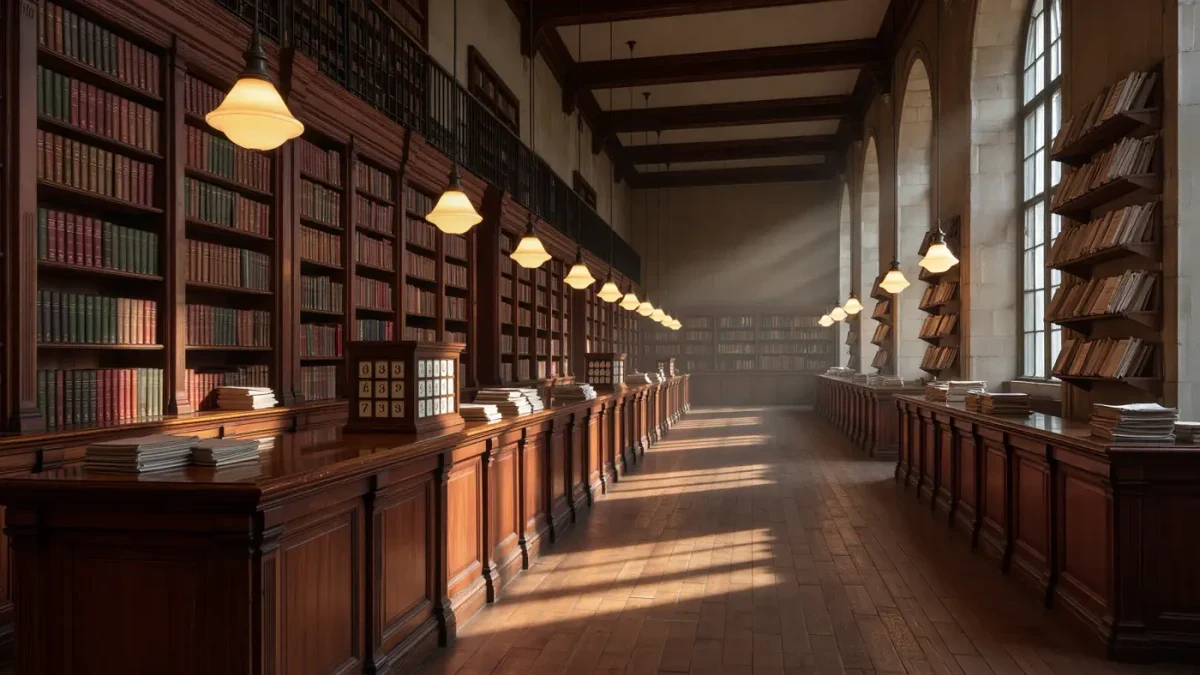
Mudie’s Select Library, a circulating library founded in 1842, decided what Victorian England read by deciding what to stock — and killed the three-volume novel in 1894.
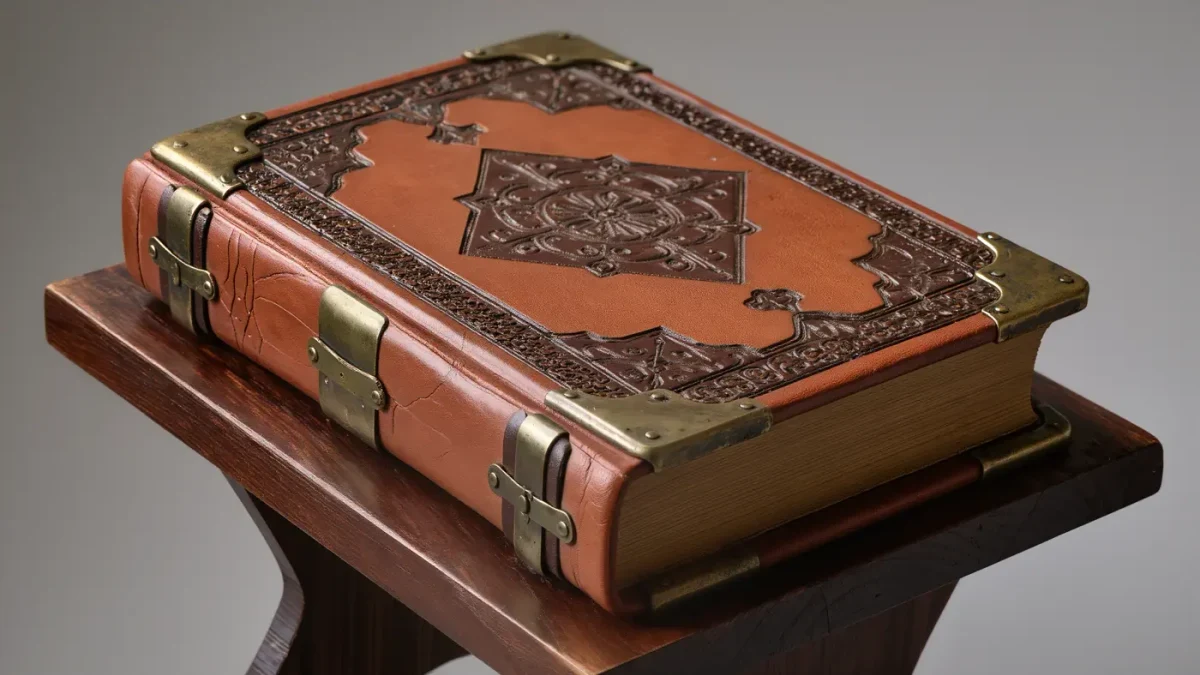
The Bay Psalm Book (1640) was the first book printed in English North America; eleven copies survive, and one sold at Sotheby’s in 2013 for $14.2 million.
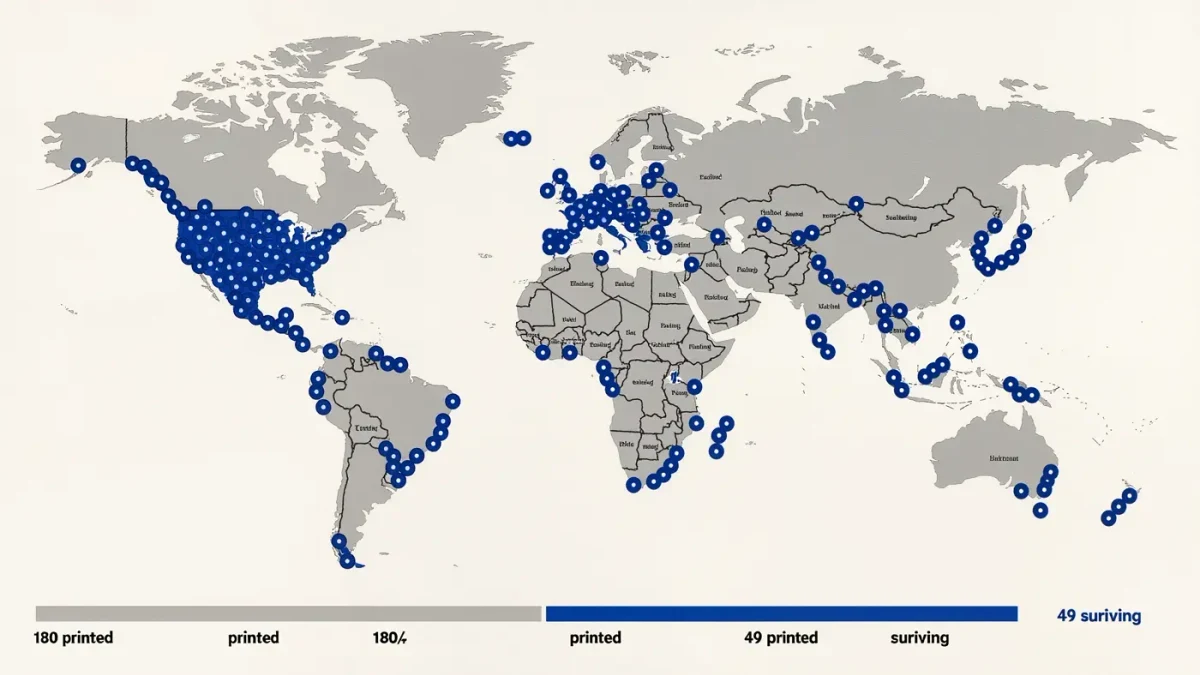
About 49 Gutenberg Bibles survive of the roughly 180 printed around 1455 — here is where the copies live, from the Library of Congress to Tokyo, and why they lasted.
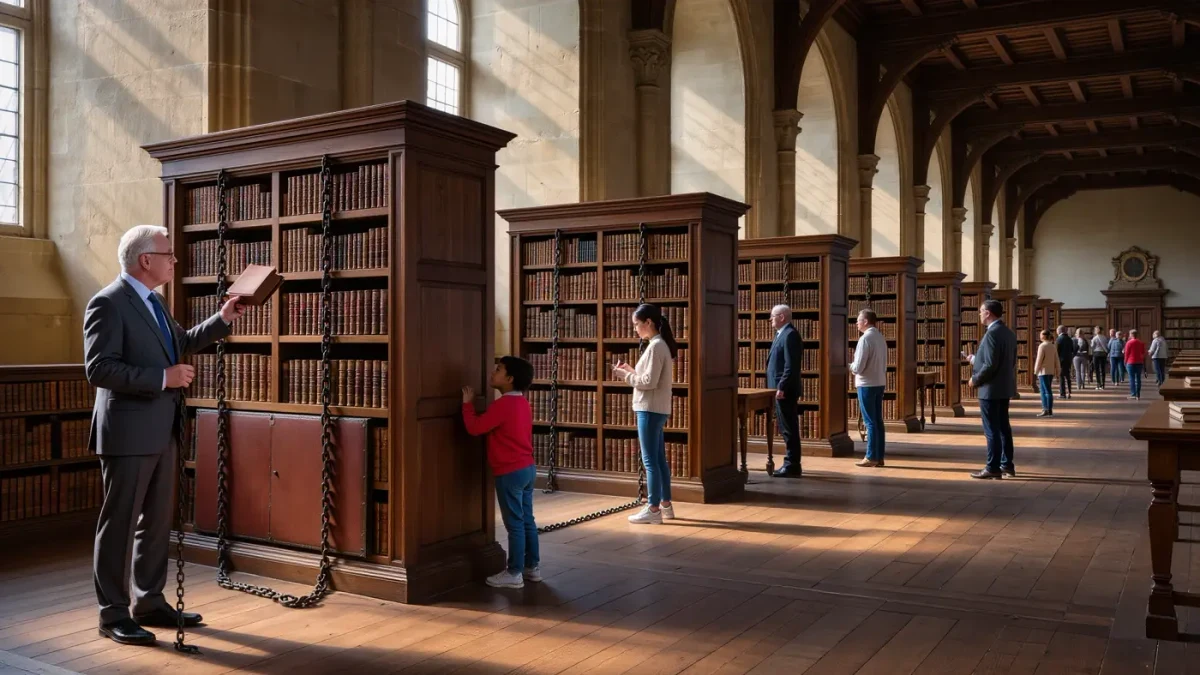
Chained libraries fastened their books to shelves with iron because one volume could cost a scribe half a year — and the largest survivor, at Hereford Cathedral, still keeps its cases, chains and locks of 1611.