To read a painting is to treat it as an argument rather than a decoration. The word is not a metaphor for its own sake: Cambridge Dictionary defines reading as obtaining meaning, and that is exactly what an art historian does in front of a canvas. The picture is a text with grammar. Composition is its sentence structure. Light is its emphasis. Iconography is its vocabulary.
Most gallery visitors stand still, wait for a feeling, and move on. That is a fine way to enjoy art, but it is not reading. Reading means asking what the painter put where, and why. It means noticing that a figure's hand points somewhere, that a window opens onto a landscape, that the brightest patch of paint lands on a face rather than a crown. None of this requires a degree. It requires patience and a short list of questions, which this guide supplies. Readers following this should also see Sent Back: On the Ninety-Year Bargain That Decides Which Books Survive.
Our analysis runs through three layers: how a painting is built, how it directs your eye, and what its symbols meant when it was made. Work through them in order and any picture, famous or unfamiliar, will start talking. Our art news section covers the trade side of this world; this piece covers the skill itself.
What does it mean to read a painting?
It means extracting meaning from what you see, in the same way you extract meaning from a page. The comparison is not loose. Cambridge Dictionary lists reading as both obtaining meaning and understanding, and both senses apply here. A painting was made by a person making choices. Every choice is information.
Start with the obvious but overlooked question: what kind of picture is this? A portrait, a landscape, a still life, a scene from scripture or myth? Genre sets expectations. A portrait is about status and self-presentation. A still life is about objects, and often about mortality hiding behind fruit and flowers. Knowing the genre tells you what the painter is likely arguing about.
Then ask who the picture was made for. A private devotional panel and a public civic commission answer to different pressures. You cannot always learn this from the wall label, but even the label's bare facts, date and place, give you a foothold. A painting is a message; the date and place are the address it was sent to.
How does composition control what you see?
Composition is the arrangement of shapes, lines, and masses on the flat surface. It is the first thing a painter decides and the last thing most viewers notice. Train yourself to see it and pictures open up.
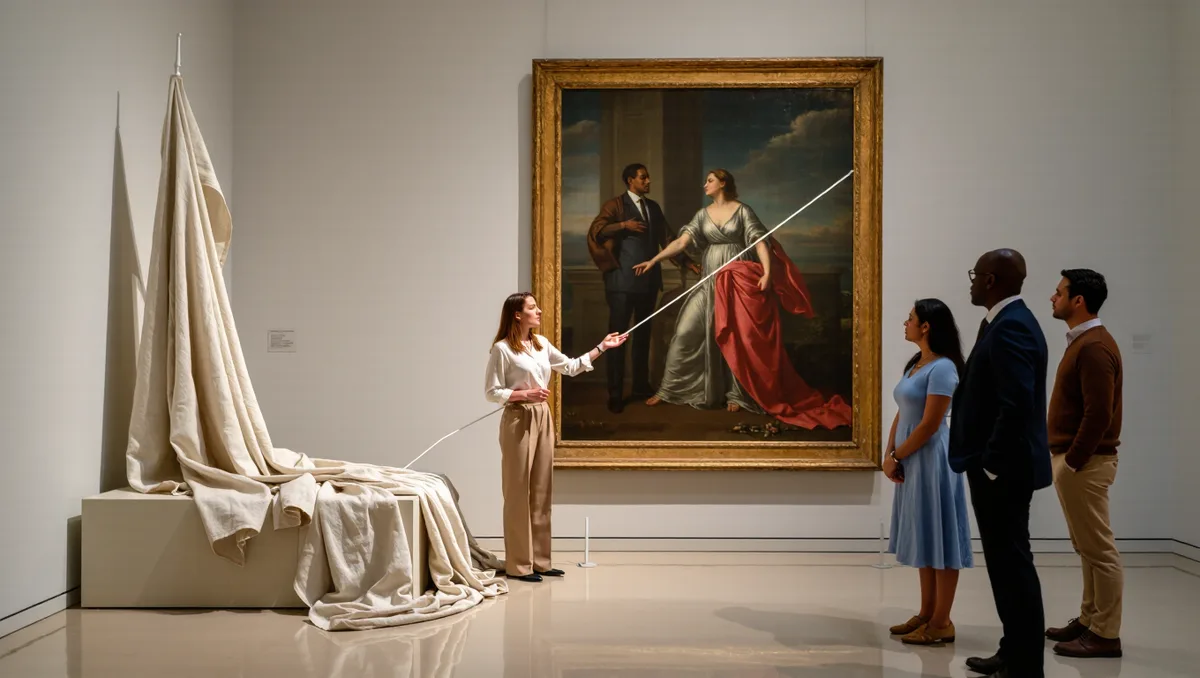
Begin with geometry. Squint until the detail blurs. You will see the underlying structure: a triangle of figures, a horizontal band of sea, a diagonal road pulling the eye into depth. Renaissance painters loved the stable pyramid. Baroque painters loved the restless diagonal. Neither is better; each suits a different argument. A pyramid says order. A diagonal says motion and trouble.
Next, find the focal point. Where does the painter want your eye to land first, and where does it go second? Painters steer you with contrast: the sharpest edge, the strongest colour, the brightest light. Follow the path deliberately. If your eye keeps sliding to a corner, ask what is doing the work there. Sometimes a minor figure holds a detail that reframes the whole scene, a dog, a letter, a half-hidden child. This connects to our earlier piece, First Light: Illuminated Manuscripts.
Then consider space. How deep does the picture go? Is there a foreground, middle ground, and background, or is the space shallow and pressed against the surface? Shallow space keeps you at a distance, like a spectator behind glass. Deep space invites you in. Neither is neutral; each is a choice about your relationship to the scene.
What does light tell you?
Light in a painting is rarely natural. It is directed, like a stage spotlight, and what it illuminates is what the painter considers important.
Ask three questions. Where does the light come from? What does it touch, and what does it leave in shadow? Is the light plausible or impossible? A single window casting consistent shadow reads as observed reality. A figure glowing against a dark ground reads as vision, revelation, or theatre. The difference between those two light sources is often the difference between a picture about the world and a picture about the spirit.
Shadow matters as much as light. What is hidden? Painters use darkness to withhold. A face half in shadow withholds judgment. A battlefield dissolving into blackness withholds the cost. When you notice yourself straining to see something, you have found the painter working on you.
Colour runs alongside light. Warm colours advance, cool colours recede, and a single dissonant hue will pull the eye like a shout. Look for the one colour that appears nowhere else. It is usually load-bearing.
How do you decode the symbols?
Iconography is the study of what images meant to their first audiences. A lily meant purity. A skull meant death. A dog meant fidelity. These meanings were shared conventions, closer to road signs than to private poetry, and painters used them fluently.
You cannot reconstruct every convention from memory, and you should not try. What you can do is notice oddities. Why is there a candle lit in daylight? Why does a saint stand on a book? Why is the fruit slightly rotten? Anachronisms and oddities are usually symbols, and a good wall label or catalogue entry will name them. Museums publish exhibition catalogues precisely to carry this knowledge, and reading one after a visit is how the symbols stick.
Be careful with over-reading. Not every object is a code. Sometimes a table is a table. The discipline is to hold symbol and literal description together, propose a reading, and test it against the whole picture. If your interpretation makes everything else in the painting more coherent, keep it. If it explains one detail and muddles the rest, drop it.
What this means for your next gallery visit
Practical steps, in order. Pick one painting and give it ten minutes; ten minutes on one picture beats an hour of drifting. State the genre and date to yourself. Squint for the composition. Trace your eye's path and find the focal point. Ask where the light comes from and what it hides. Note the odd object, then check the label. Finally, say what you think the painting is arguing, out loud if you dare. That sentence is your reading.
Two habits will speed you up. First, compare. Put two pictures of the same subject side by side in your mind, and the differences become arguments. Second, read the scholarship after seeing, not before. Walking in with a guidebook's verdict pre-installed is like reading a plot summary before the novel. Go in cold, form a reading, then check it. Our reviews section regularly takes up the books that support this kind of looking.
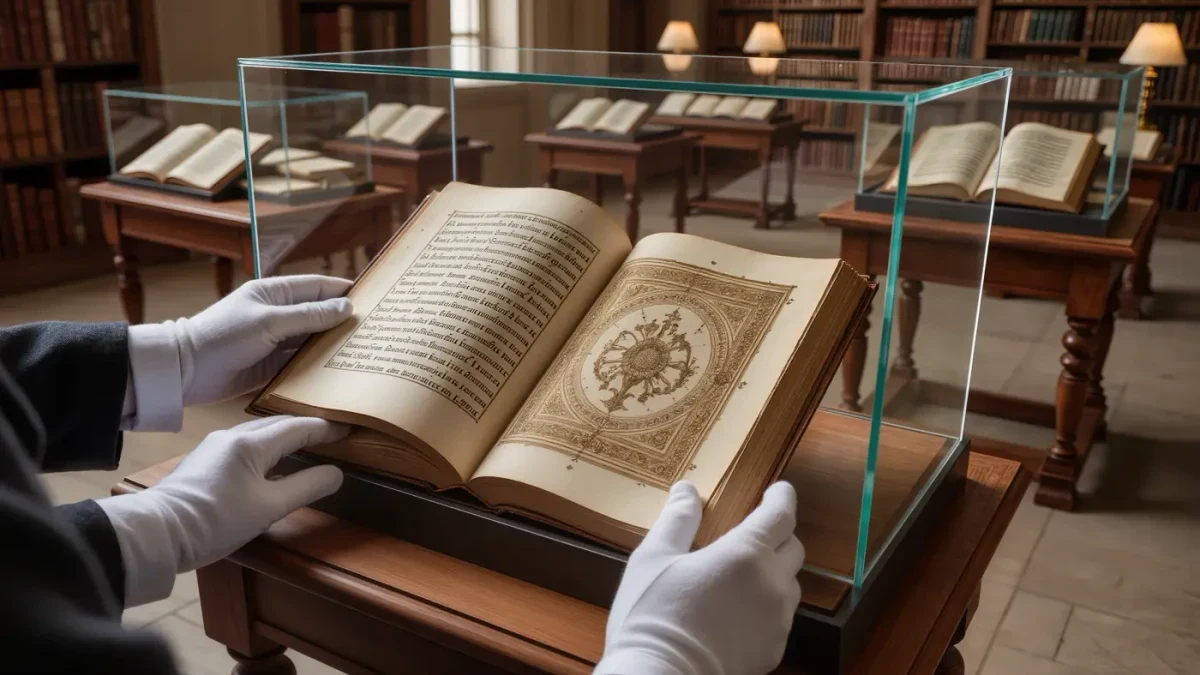
A last note on where this skill travels. The same close reading works on illuminated manuscripts, where image and text argue with each other on the same page, and on book cover design, where a commercial artist compresses a whole novel into one composition. Once you know how to read a painting, you find you have been given a tool that works on almost any made thing. The gallery is simply the best place to learn it, because the originals are there, and the originals are the text.
No method turns looking into certainty. Art historians disagree with each other constantly, and the best of them change their minds. What the method guarantees is engagement: you will leave the room having done something rather than having seen something. That is the whole point of learning how to read a painting. The pictures were built to be read. Most of us were simply never taught the alphabet.