Digitized manuscripts have redrawn the map of manuscript study. Since the Metropolitan Museum of Art opened its image vault under Creative Commons Zero in 2017, and the Vatican Apostolic Library and the Bibliothèque nationale de France poured centuries of parchment into public portals, a folio once seen by a dozen scholars a year can reach millions in an afternoon.
What did the Met's Open Access policy actually change?
It made reproduction free. In 2017 the Metropolitan Museum of Art released hundreds of thousands of images — roughly 375,000 at launch — under Creative Commons Zero, the legal instrument that surrenders rights to the public domain. Manuscript folios joined the stream: downloadable, printable, commercially reusable, without permission or fee.
The shift was legal before it was technical. For decades museums sold reproductions and licenses; Creative Commons Zero declared that images of public-domain objects belong to everyone, including publishers, filmmakers and the person who wants a fifteenth-century calendar page on a mug. The count of released images has since climbed toward half a million, and the policy has been imitated widely. For readers, the change is felt less as an archive than as permission.
For manuscripts the release had a specific effect: detached leaves, cut books and dispersed cycles could be hunted across collections with a search box rather than a decade of correspondence. The Met's own holdings — hours of the Virgin, single leaves, cuttings — became raw material for reconstruction projects that no museum could have funded in physical form.
What is the Vatican digitizing?
Its Greek, Latin and vernacular codices, at industrial scale. The Vatican Apostolic Library holds roughly 80,000 manuscripts; its digitization program, built around the DigiVatLib portal, has been publishing thousands of them in high resolution, with the stated aim of securing the texts against loss and opening them to the world.
Begun in the 2010s and accelerated with corporate partners, the program treats scanning as insurance: parchment burns, floods and wars being what they are, a high-resolution surrogate is the cheapest survival plan ever devised for a codex. The scholarship followed the scanning. A paleography student can compare Vatican Latin manuscripts across centuries without a reader's ticket, a passport or a letter of introduction — three instruments that once governed access to that library, and that governed it strictly.
What is Gallica, and why does it matter?
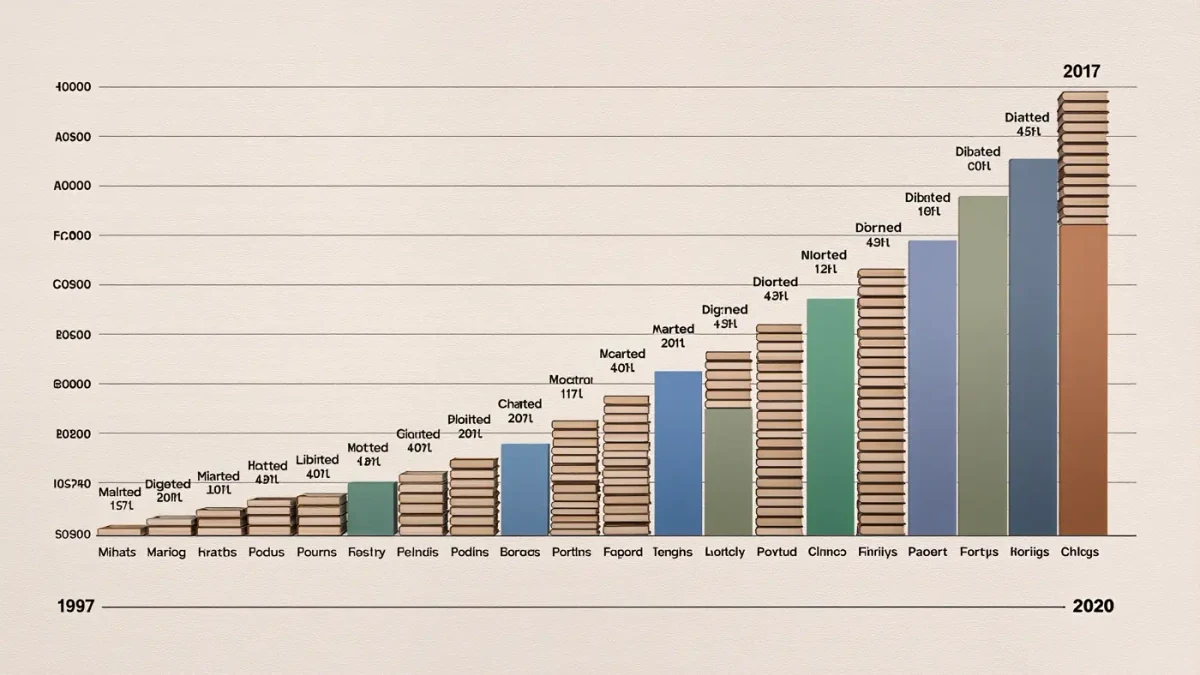
Gallica is the Bibliothèque nationale de France's digital library, launched in 1997 and grown into one of the largest public collections of digitized books and manuscripts. For medieval and early modern material it is a first stop: hours of the Virgin, chronicles, charters and early printed books, free to download.
Gallica's age matters. A generation of scholars has grown up inside it, and its habits — search by shelfmark, citation by folio, download of whole volumes — set the default expectations that younger portals inherited. Comparable programs elsewhere, from the British Library's Digitised Manuscripts to the Smithsonian's collections portal, converge on the same shape: free images, stable identifiers, entire manuscripts rather than curatorial highlights.
What genuinely changes for researchers?
Pace and comparison. A paleographer can call up fifty variants of a text before lunch; a dispersed manuscript, its leaves scattered across three countries, can be reassembled on screen; teaching shifts from slides to sources. The archive's gatekeeping moves from appointment book to bandwidth.
The deepest change is collation. Textual scholarship has always been a comparison of copies; digital surrogates make the comparison cheap, fast and public. New readers arrive alongside the scholars: type designers mining letterforms, novelists hunting period detail, teachers building whole seminars around a single manuscript's calendar. The manuscript page has become, oddly, a mass medium.
Citation culture shifts with it. Folio numbers, once private notations, have become the shared coordinates of a global conversation; a reference to a specific verso is answerable from a laptop in nearly the same detail as from the library itself.
Where does the digital surrogate fall short?
In everything codicological. A scan flattens: no raking light, no sense of hair side against flesh side, no pricking, no quire structure, no smell of size or decay. Colour drifts, gold goes dead, and the scan records one state of an object that keeps aging.
A manuscript is not its pictures but an artifact — skin prepared and folded, ruled and sewn, bound and rebound, worn and repaired. Photography captures a surface at one moment under one lighting rig. The evidence a codicologist needs — the depth of dry-point ruling, the difference between the two sides of a skin, the tightness of the sewing, the trim of the margins — survives only in the object.
Bindings suffer most. Nearly every digitization rig photographs the open page; the object most consulted by historians of the book — the sewing, boards and covering of the volume — is the least photographed, so the digital revolution has quietly re-centered manuscript studies on the page at the expense of the structure that holds it.
Lacunae are quieter. Digitization campaigns select: whole classes of material, from bindings to fore-edge paintings, escape the camera; metadata arrives thin; and every surrogate is already an interpretation, a curatorial sentence about what matters. The honest position, articulated by most librarians themselves, is that the digital manuscript is a superb research aid and a poor substitute — the record of a visit, not the visit.
The Library of Congress and other national libraries publish their digitized collections under the same working premise: open access changes who can look, and only looking changes what can be known. The democratization of the archive, in the end, is a democratization of attention — no small thing, but a different thing from touching the page.