I Regret I Am Able to Attend: A Life Among Artists (2026), Jessica Craig-Martin's first book, is a 288-page record of the 1970s and '80s art worlds of London and New York written by someone who was there but had no professional stake in it. According to the Los Angeles Review of Books, that position — daughter rather than dealer, watcher rather than maker — is exactly what makes the book worth reading as history. The child of an artist, the review argues, may be the artist's most clearheaded critic.
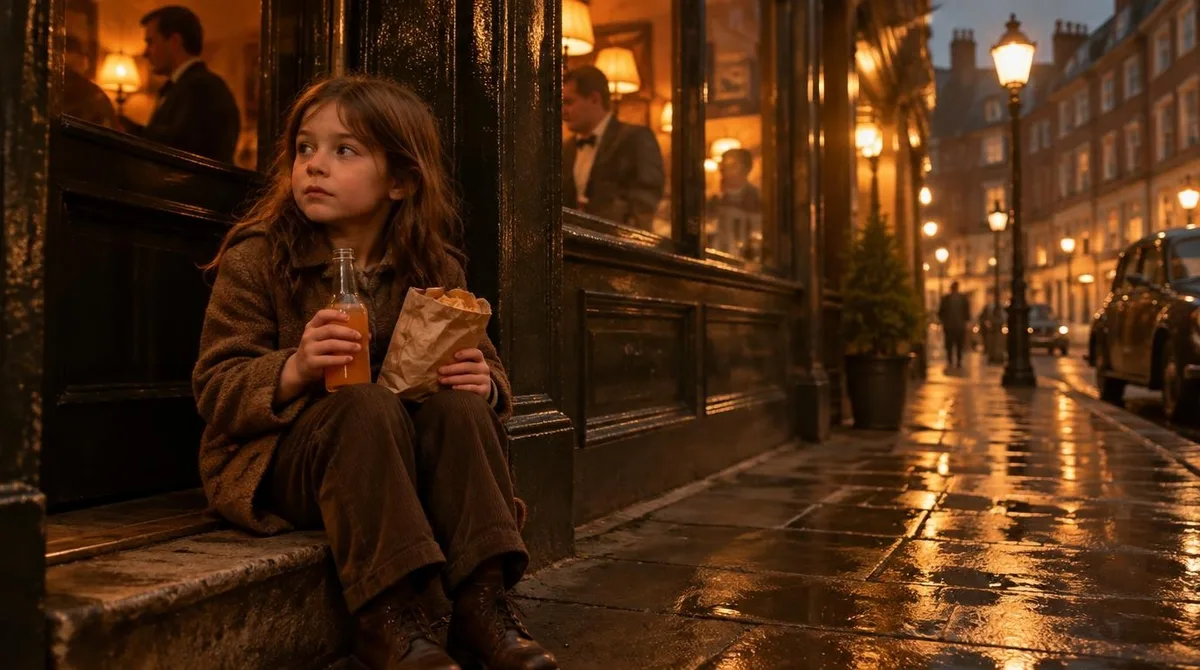
The claim matters for readers who care about how culture gets documented. Official histories of an art scene are written by its winners. Craig-Martin's book, published by Random House, comes from the person waiting in the car outside the pub with a bag of crisps and orange Tango while the parents drank. That vantage preserves details a careerist would never think to write down: David Hockney carrying a crate of oranges from Harrods to a Greenwich Park picnic, Jasper Johns getting along well with children and keeping a pet monkey. It is the kind of texture that, as the review puts it, enlivens a fact through time. For related coverage, see Censored Editions — The Smuggled Text: How Censorship Shaped Editions Readers Actually Bought.
The book's own framing is deliberately anti-historical. "I think in stories; I tell stories, and here are some stories," Craig-Martin writes. "You may stumble across a narrative arc of some kind, but I'll be damned if you detect any redemption." In her publisher's office she objected to the label memoir: "It's just episodes from a questionably lived life." The Los Angeles Review of Books describes the result as a coming-of-age send-up of blue-chip bohemia that has "the effect of throwing spaghetti at a wall and realizing it resembles a Pollock." Dissonant, operatic, alive — and, the review argues, an important art-historical document all the same.
Why does a child's view make better history?
The review's central argument borrows a line Craig-Martin attributes to Fran Lebowitz: "Art history is artists arguing in bars." In this book, art history is the daughter watching artists argue in bars. That shift in position does real evidentiary work. Craig-Martin had, in the review's phrase, no stake in the game professionally but every stake personally. She was less fixated on art than her parents were, perhaps because she saw early what total commitment to it cost. The review's sharpest formulation: this is not a memoir about the party souring — the party was always sour.
What that distance yields is a record of the scenes' ordinary infrastructure, not just its famous names. Craig-Martin skips the expected tales from Indochine and CBGB only briefly; she also exalts lesser-known places — Disco Donut, Julian's Billiards, the revival house Theatre 80, and a 10th Street deli called Sweet Tooth where she bought weed. Readers of publishing history know this pattern well: the places where a culture actually happens are usually recorded by its margins, not its centers. Our own history coverage returns to that idea often, from how Mudie's circulating library shaped Victorian fiction to the venues where a generation's reading habits were quietly decided. This connects to our earlier piece, One Guinea a Year: How Mudie’s Circulating Library Ruled Victorian Fiction.
What does the book actually cover?
The life is specific and, at times, startling. Born to young Yale School of Art graduates Michael Craig-Martin and Jan Hashey, the author spent her early years in near poverty in London's growing art scene. "Maybe it says something that by the time I was nine I'd attended not one but two art world events that centered on Yoko Ono's vagina," she writes. Her parents separated when she was nine, and she grew up between her father's preoccupied career and her mother's 2,500-square-foot "filthy" SoHo loft, shared with Hashey's new husband, the artist Yasuo Minagawa. She attended a posh bohemian boarding school that closed amid scandal, became a punk, and worked the register at Dean & DeLuca, selling smoked eel to Jean-Michel Basquiat.
From there the episodes multiply. She grieves the death of her first love, goes to war with her alcoholic mother, travels to Sri Lanka, Morocco, and Thailand as a nanny, and marries and divorces the art star Ashley Bickerton. She works as a fashion assistant at British Vogue and eventually becomes a party photographer, shooting for The New Yorker, Vanity Fair, and Vogue. The photographs matter to the argument: the review calls her memoir "an archive of access and excess, shimmer and rot — not unlike her photographs."
Where the record holds back
The review is candid about the book's method of concealment. Every memoirist with rare access faces a tension between what is revealed and what stays obfuscated. Craig-Martin skims the surface of her pain and occasionally dips into it without letting it swallow her, and the amount of space she gives an event tells the reader how much it cost her. A family robbery while everyone slept upstairs gets exactly one sentence — "My family had recently been robbed while upstairs we slept, oblivious, and I was now hyper-aware of predators" — while the Ono-centered performances get two paragraphs. Her relationship with her father stays guarded: "complex, as I remind him of things he would rather not linger on." For historians of the period, that selectivity is itself evidence. What a witness refuses to dwell on maps the pressure points of a scene as accurately as what she catalogs.
The book also lands in a present-tense argument. At a moment when the "nepo baby" has been cast, in the review's words, as a deified villain who both repels and attracts, Craig-Martin makes a case for the art-world child as witness. "As art brats our lives were rich and layered in certain ways, but our worlds lacked the simple steadiness and presence that children need in order to thrive," she writes. "The parents would have laughed outright at the notion of prioritizing our needs over theirs." When Jennifer Bartlett, the artist-novelist who sheltered her from her mother's rages, tried imposing rules like "No TV or ice-cream before eleven a.m.!", the comedy and the neglect arrive in the same sentence.
What the evidence establishes is this: a debut book by a working photographer, built from episodes rather than argument, has become one of the more useful documents of two art scenes whose participants were too busy making myth to record the room. What remains unknown is whether the genre — the scene memoir from the scene's child — will keep producing records this sharp, or whether Craig-Martin's vantage was unrepeatable. The title's irony suggests she suspects the latter: she calls it her life among artists, as if she stood apart. The review's verdict is that she did, and that the standing apart is the book's whole value.