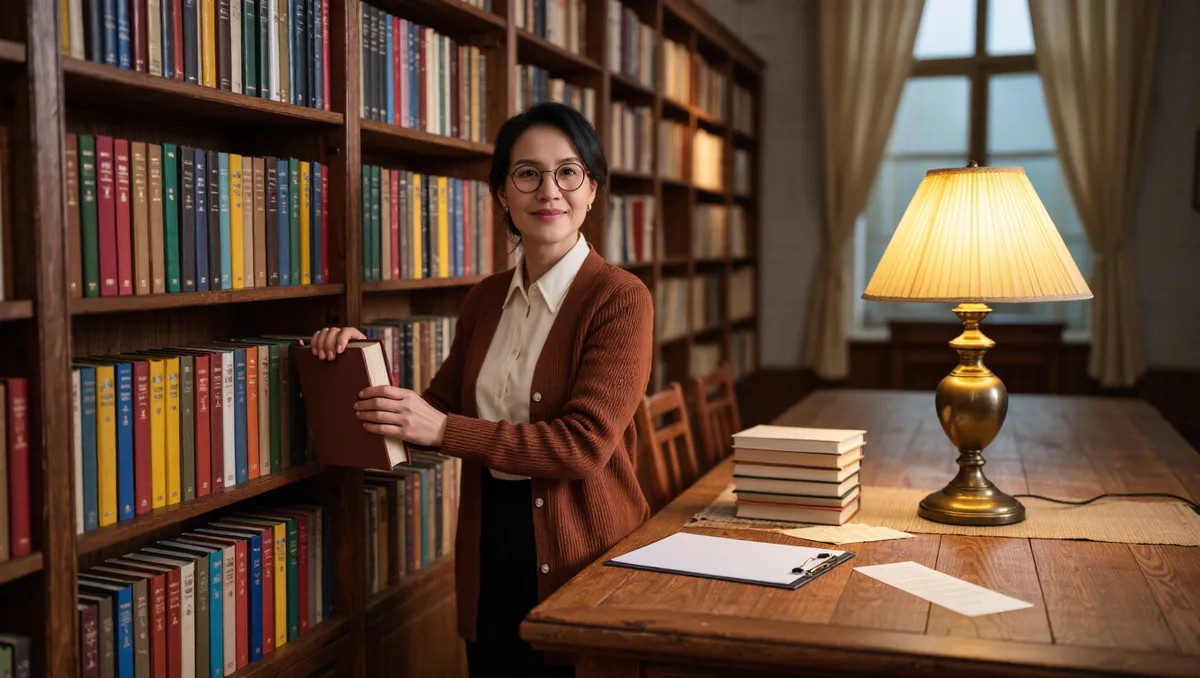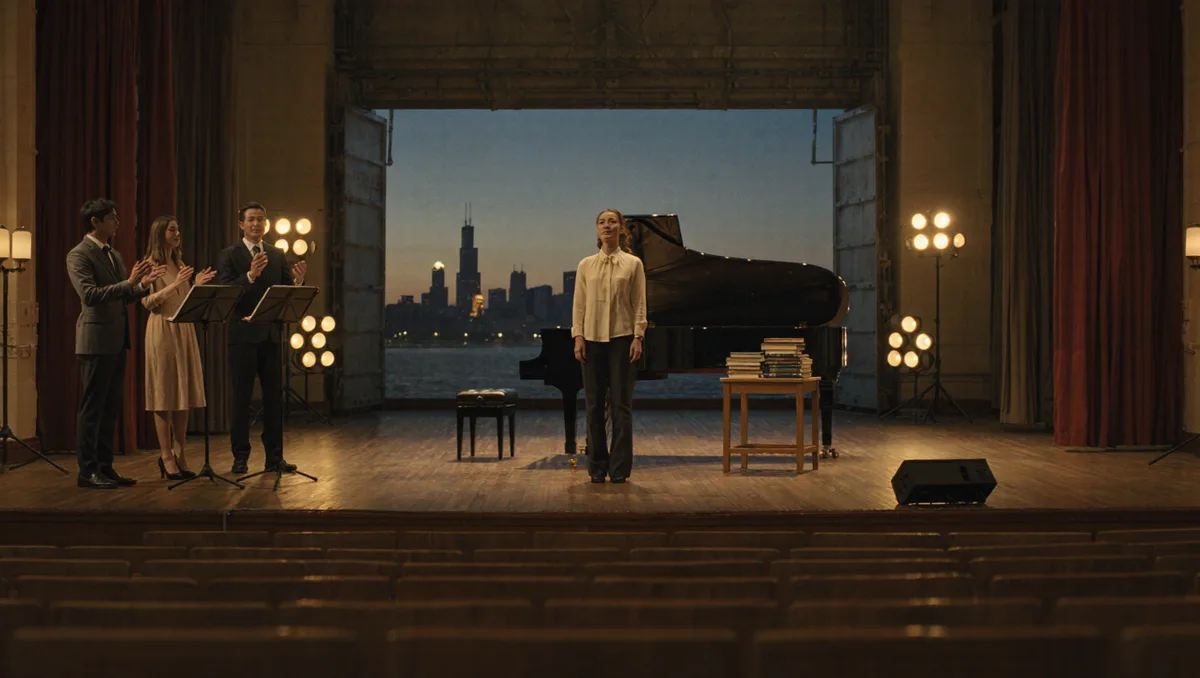
Barbara Kingsolver went to the Chicago Humanities Festival last weekend to talk about her new novel, Partita, and she turned the usual author interview inside out. Instead of sitting across from a host, the Pulitzer Prize-winning author appeared solo before a packed crowd at Lincoln Park's Francis W. Parker School, with two ASL interpreters on stage left. The feature, published by Third Coast Review, explains why the format changed: the novel is about music, so she brought a pianist.
For readers new to Kingsolver, the talk works as a compact guide to her new book and to the life behind it. She has published 19 books, including essays, poetry and stories for children. Her latest takes its title from a Baroque musical form — a partita is a set of variations — and follows Livia, an injured piano prodigy whose story echoes an injury the writer herself suffered in her youth. The event is the kind of literary news that rewards a closer look, because the novel's shape and the author's biography keep overlapping. Anyone following the wider world of literature will find the details worth unpacking. This connects to our earlier piece, A Thousand Years of Contenders: Who Really Wrote the First Novel?.
What is Partita about, and why did a pianist share the stage?
Partita is set over seven days and explores love in many forms, including a love of music, along with class, class barriers, and a life and family physically broken. It is set in Eastern Tennessee, where Kingsolver lives today on a farm in the woods. Because the heroine is a pianist, Kingsolver invited local pianist Sarah Jenks to join her. Between readings of scenes, Jenks played on a black grand piano the classical pieces Livia plays in what the author called the "kinda steamy" book: Mozart's "Rondo Alla Turca" and Chopin's "Prelude n. 6 in B minor, op. 28." That Chopin piece carries a slow arpeggio that, in Kingsolver's telling, "feels like trying to climb up from or fall out of the dark." "And now we're all sad," she said at the end of the short piece.
The music did not stop at the stage. Kingsolver does not normally listen to music while she writes — she prefers quiet — but she curated a 14-song Spotify playlist to accompany reading Partita, and musical selections are interspersed throughout the audio book too. Even though she lasted only one year in music school, she still plays classical piano, as well as rock bands and jazz with her husband. She also loves to study anthropology, chemistry and botany.
Where does the author come from?
Kingsolver grew up in Eastern Tennessee, the daughter of a country doctor who was often paid in vegetables — a modest life with, as she put it, "no Easy-Bake Ovens or Rock 'Em Sock 'Em Robots." Her family lived in the Congo for a time, with no electricity or running water, after her father was offered a contract to help abroad. He treated locals for leprosy, smallpox, diphtheria and polio, and that experience left a lasting impact on her. She observed what she called colonial arrogance: stripping natural resources, purportedly to make lives better, but always leaving a mess — just like in Appalachia, in her view.
That Congo history runs deep in her work. To research US intervention and CIA-sanctioned assassinations in the Congo, she read Jonathan Kwitny's Endless Enemies: The Making of an Unfriendly World. The American hubris masquerading as helpfulness that she found there became an underpinning of her masterwork The Poisonwood Bible, which began life as a file entitled "that Damn Africa Book."
Who does she read, and who does she admire?
Kingsolver named Chicago's Carl Sandburg as her literary hero and recited "City of Big Shoulders" from memory to prove her devotion. She gave props to working-class hero Studs Terkel and to Oprah, whose book club, she said, "moved literary power from New York City to people's living rooms." Accessible reading and writing, she argued, "helps us process our emotions." Like the late, great Dolly Parton, she wants to uplift her Smoky Mountain neighbors, who might not have "high arts" but offer rich folk culture, from front porch music to quilt making.
She never officially studied writing and has never taught it, confessing to some impostor syndrome on that score. She learned by reading Virginia Woolf, John Steinbeck and Charles Dickens. As a child, she wrote in secret because, in her words, "I didn't know books could be written by the likes of me." Before she was a writer, she decapitated rabbits at an Eli Lilly lab, cleaned houses, and worked as a nude artists' model.
How does she actually write a novel?
Asked by an audience member whether she knows the end of a book when she starts, Kingsolver replied quickly: "Yes." Every writer is different, she added, but she calls herself an architectural writer. Trained as a scientist, she structures big questions that need to be asked, then creates a story to answer them — something like a conversation with yourself or a book group, nonlinear, "like a movie in my head." Usually about two-thirds of the way through a project, she sees the last scene "as a connected tapestry." After the first draft and an edit, she calls revision "the best part," enjoying the schism of "I know that was going to happen" and "I didn't see it coming."
Her husband Steven Hopp, who holds a PhD in animal behavior, once asked her, "Why do you do these terrible things to your characters?" Her answer: she wants to see how they survive, how they come through their trials. Writers put themselves into the lives of broken people, she said, quoting her favorite motivational lines from Toni Morrison: "You don't get to quit on the future" and "sometimes you don't survive whole, you just survive in part, but the grandeur of life is that attempt."
That method produced her 2022 novel about opioid addiction, Demon Copperhead. "It broke my heart," she said. "But I survived." She spoke about researching addiction and America's 50-year failed "war on drugs," arguing that substance abuse is not a moral failing but a disease like cancer that warrants compassion. Readers who want the longer arc of how books reach ordinary people — from Oprah's living rooms to the cheap paperbacks that changed American reading — can trace that history in The Pocket Revolution: How Cheap Paperbacks Rewrote the Rules of American Reading. Readers following this should also see The Pocket Revolution: How Cheap Paperbacks Rewrote the Rules of American Reading.
What did she leave the audience with?
Kingsolver carried the confidence, cadence and humor of a standup comedian, complete with audience interactions. She asked the crowd about the environmental impact of dyeing the Chicago River green every St. Patrick's Day. Her parting benediction was about dialectical thinking — holding two contradictory ideas as simultaneously true. "When you read a novel, you practice this," she said. "We must have conversations with our neighbors and exercise those muscles." The Chicago Humanities Festival presents more author book talks on Saturday, and readers tracking the season's events can find more coverage in the site's books news.