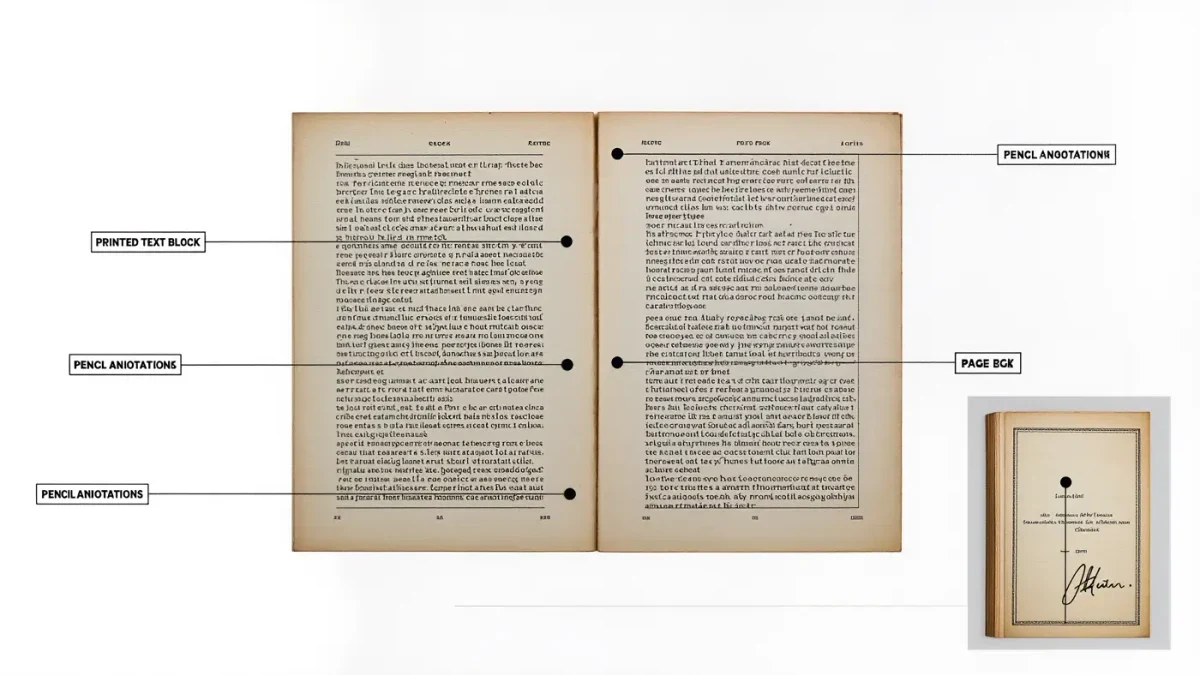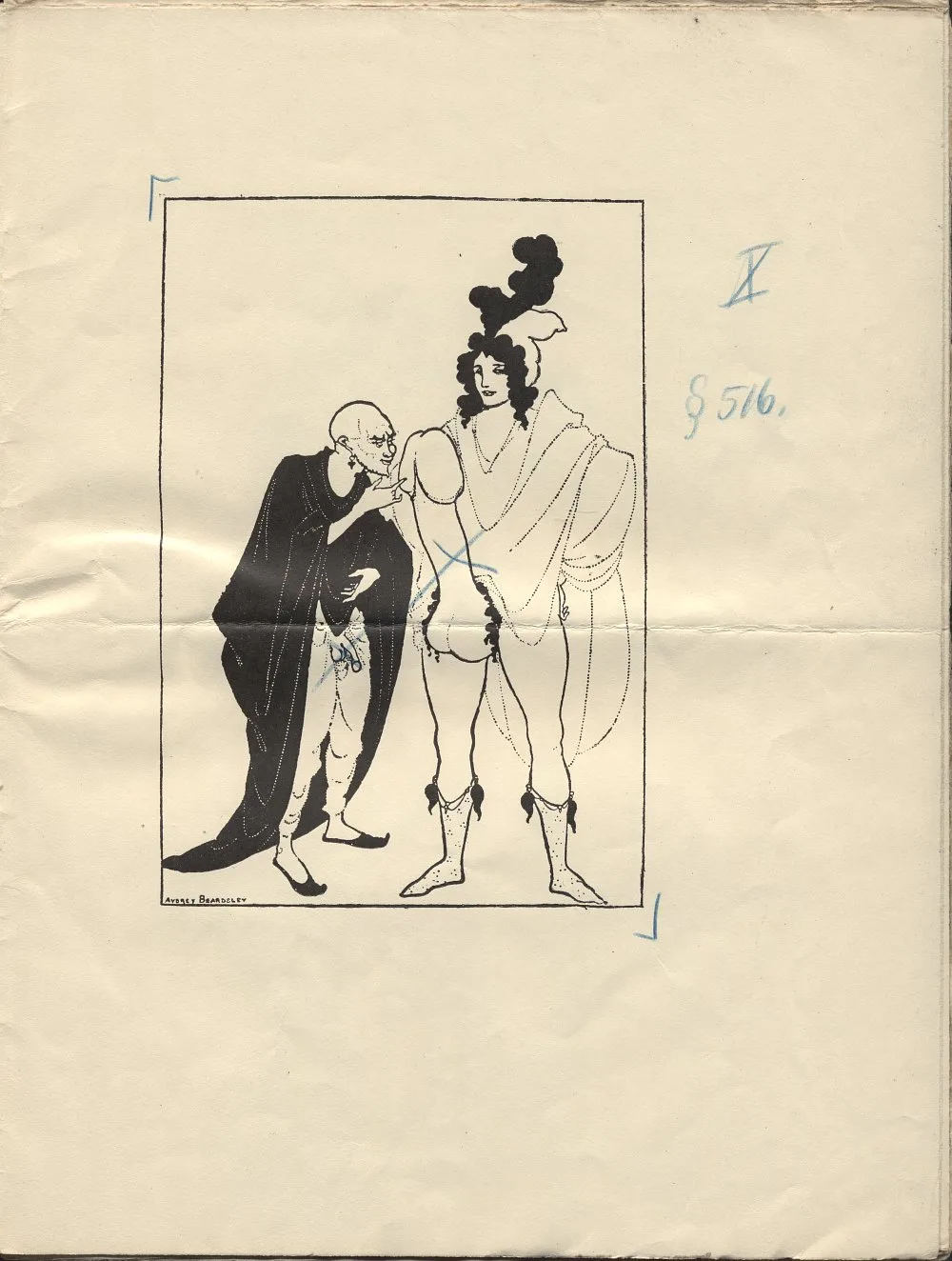
Marginalia — writing in the margins of books — is as old as the codex, though the word entered English through Samuel Taylor Coleridge in the early nineteenth century. He turned pencil notes into literature; scholars treat the margins as a historical source in their own right, preserving the minds of readers who left no other trace.
The margin is the only room the reader was ever given. Printed text arrives finished, authoritative and closed; the white space around it is a standing invitation to disagree, summarize, correct or confess. Readers accepted for as long as books have existed, and the record they left — glosses, arguments, sums, doodles — has become one of the richest sources for the history of reading, a field that has nowhere else to dig.
What is marginalia?
Everything a reader adds to a page’s margins: corrections, summaries, cross-references, pointing hands, objections, signatures, sums and doodles. The word is Latin in shape but English by adoption, popularized in the early nineteenth century by Samuel Taylor Coleridge, whose pencil notes in borrowed books became a literary genre of their own.
Its iconography is old. The manicule — the little hand, index finger extended — appears in medieval manuscripts centuries before printed punctuation offered alternatives; nota marks, trefoils and pilcrows did the same work. Each reader’s hand differs, which is why scholars can follow one annotator across a shelf of volumes by the shape of a pointing finger alone. The margin has its own paleography, and nobody planned it.
Coleridge’s role in the word’s history is worth its paragraph. He annotated constantly, often in other people’s books, sometimes in volumes lent by friends who learned too late what they had unleashed; portions of his notes were serialized in Blackwood’s Magazine in the 1830s, some printed after his death in 1832. What began as private reading became public criticism, and the English language gained a term for the practice.
Why did medieval readers write in the margins?
Because the margin was the interface. Medieval study was commentary: authoritative texts circulated surrounded by glosses, and university teaching moved outward from the central column into the apparatus around it. The Talmudic page makes the principle explicit — central text ringed by centuries of commentary — and scholastic manuscripts did the same in Latin.
Glosses were not graffiti but scholarship’s working format, the Glossa Ordinaria on scripture being the canonical case: a running commentary so standard that scribes copied it into the page layout itself. Where the modern edition footnotes, the medieval edition margined. The difference matters more than it sounds — marginal annotation kept text and commentary within one physical glance, which is a different reading experience from flipping pages, and arguably a different thought.
Ordinary readers margined for humbler reasons: to correct printing errors, to mark passages for reuse in sermons or letters, to keep accounts of where reading stopped. A margin full of a owner’s notes functioned as an external memory, and second owners inherited it, answering back in different ink. Surviving copies frequently carry three or four strata of hands, centuries apart, in visible argument.
Who are the famous marginal writers?
Coleridge made the practice respectable by being brilliant at it; his notes, collected posthumously, run to volumes. Blake annotated Sir Joshua Reynolds’ Discourses with contempt now read as criticism in its own right; Keats marked his Shakespeare until scholars learned which passages fed which odes; Melville’s surviving books, dense with pencil, are mined for the sources of Moby-Dick (1851).
The genre’s social meaning has oscillated ever since. Victorian respectability treated annotation as defacement, and the bookseller’s “fine, unmarked copy” enshrines the preference. Against that runs the association copy — a book annotated by anyone who matters becomes an archive — and libraries collect marked copies deliberately where an earlier generation’s binders scraped the evidence clean. The market prices the hand, not the ink.
Why do historians take marginalia seriously?
Because print survives everywhere and reading survives almost nowhere else. The history of reading needs evidence of what actual readers actually did, and the margin is that evidence: attention made visible. Heather Jackson’s Marginalia (2001) and William Sherman’s Used Books (2008) built the modern field; projects like Archaeology of Reading digitize entire annotated libraries.
The Elizabethan scholar Gabriel Harvey’s annotated books — thousands of pages of one mind arguing with its reading — anchor one such project, and they changed what scholars believe about how Elizabethans read: aloud, in company, combatively. That is the margin’s gift to scholarship generally. Institutions like the Library of Congress treat annotation as evidence rather than accident, and exhibitions of readers’ marks draw the crowds that clean copies do not.
The evidence cuts across class in a way printed text does not. Publishing records preserve what the trade believed readers wanted; margins record what individual readers did with the copy in their hands — a laborer’s signed name, a student’s complaint about a book’s price, a woman’s annotation in an age that rarely credited her reading. Historians of the book speak of reading practices; the practice, physically, is on the page’s edge.
None of which settles the household question of whether to write in one’s own books. The defacement argument holds for loaned copies, and always will. But the historical record is unambiguous about the rest: every age’s marginalia became the next age’s evidence, and the pristine copy became, in the end, the poorer document — cleaner, and saying less.